
By Ernest Granson
The Canadian manufacturing sector is in the midst of a whirlwind stirred up by impulsive U.S. economic policies, a fragile EV market, an uncertain international mindset and a dubious belief in the productivity of that very same national manufacturing sector. Into this swirling gale, enter two former British Columbia loggers with a mission to prove this nation is capable of producing global quality heavy manufacturing.
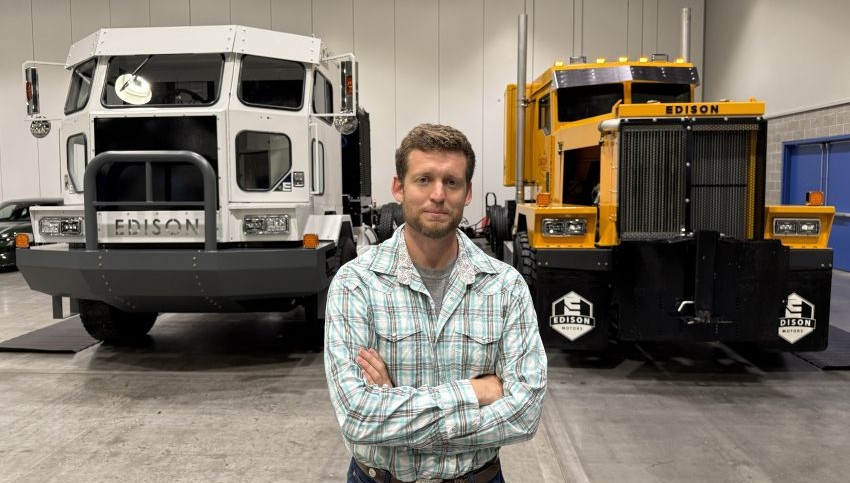
Edison Motors Ltd., is a privately owned Canadian technology/manufacturing company that has designed, refined and built Canada’s first production electric hybrid heavy-duty truck. Its headquarters and factory are located in Donald, British Columbia, a tiny, unincorporated community in the middle of the Canadian Rockies. It’s a former railway/industrial town with no official population figure and a short drive from the closest major centre of Golden B.C. – population 4,538.
The fact that this company is on the brink of creating its own, bona fide sector when other major international truck manufacturers are hesitant in entering this market displays a mark of confidence, which is certainly required for a commitment of this kind.
The two former loggers and co-founders of Edison Motors are Chace Barber, now president and Eric Little, CEO. The origins of the company began when Barber, a trucker hauling logs in B.C., became frustrated with the huge fuel costs but concluded that Tesla and other electric semis would not be suitable for off-road capabilities. When the 2008 financial crisis shattered his business, Chace enrolled in Thompson Rivers University in Kamloops where he met Little, who had experience in not only in commercial finance, but solar technology and the Western Canadian oilfields. The two soon launched their own successful trucking business working in the logging, mining and oil and gas sectors.
The cost of fuel, however, continued to be a major burden. It was this issue that motivated the two to found Edison Motors, named after Thomas Edison, the chief rival of genius Nikola Tesla and, a bit of a jab at the Elon Musk-led Tesla Inc. (Tesla’s all electric Class 8 Semi tractor is still slated go ahead with production sometime in 2026 according to Dan Priestly, head of the company’s semi division).
For Barber and Little, it’s been a challenge to bring their concept to reality for a variety of reasons but the company seems to be on its way to a production launch. Business Edge Senior Editor Ernest Granson caught up recently with ever-on-the-move Eric Little to receive an update on the company’s progress and to discuss the challenges of developing cutting edge technology and building a manufacturing enterprise from scratch.
BE Eric, I find this a unique story in that it is a company entering a market which not even the major truck manufacturers have been able to be successful at cracking. And not only that, but the company is doing it outside of a major industrial center. Tell us how this company originated, and what’s your overall goal?
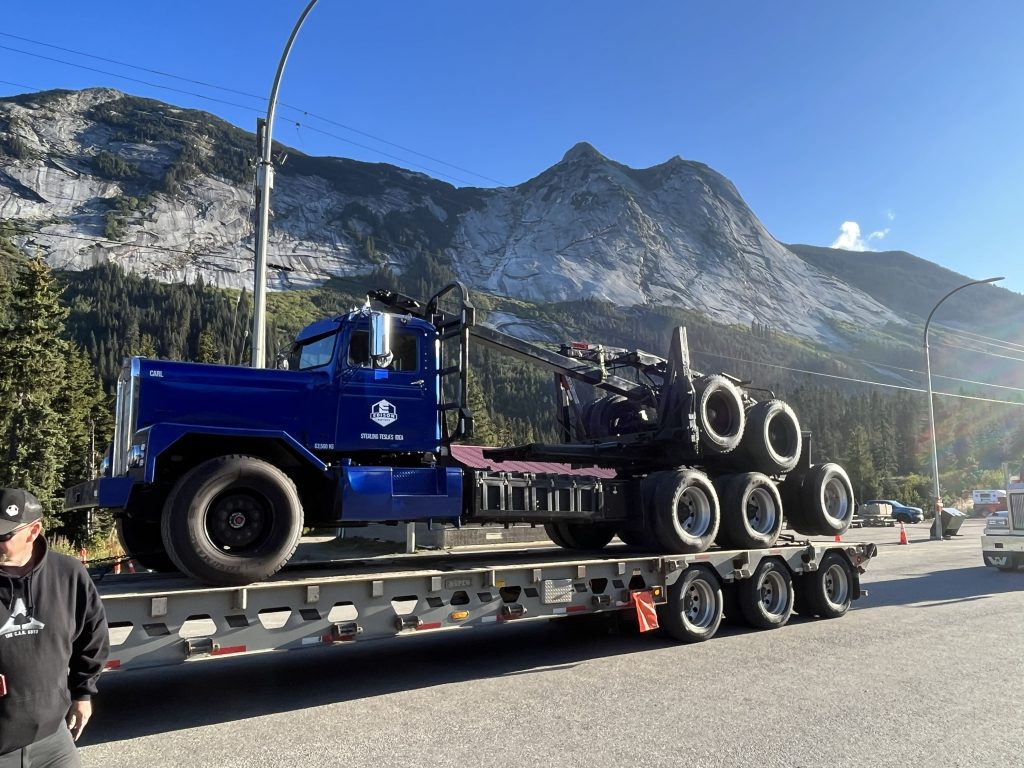
EL The goal is to bring truck manufacturing back to British Columbia. This province used to be a powerhouse in heavy duty truck manufacturing. There was a plant in Kelowna (White Western Star), and two in Vancouver (Pacific Truck & Trailer, Hayes Anderson Motor Co.). There were even a couple plants in northern BC, to specifically service the logging industry. Chace and I are former loggers. The reason for starting this company was to build our dream truck, a truck that we could drive and fix in the bush, and it really revolved around electric technology. So, we’re very satisfied that we’re now able to build what we consider the most powerful production truck in North America, one that significantly reduces fuel consumption and also excited to be able to produce it in a beautiful place right near Golden B.C. It’s stunning.
BE Why is it that heavy duty manufacturers like Kenworth, Mack, Peterbilt or Freightliner, or even Volvo and Tesla are backing off from electrifying off road trucks?
EL I wouldn’t say they’re backing off. I just think they bet on the wrong horse. Our approach is hybrid technology. We use a diesel engine to charge the truck’s batteries as it’s operating so that we’re not exclusively being powered from a diesel engine. We want to make sure that ours is fundamentally an electric vehicle that you could charge either from diesel or from an electric outlet to give total flexibility to the operator. We know that diesel powered trucks are here to stay so our main purpose is to significantly reduce fuel consumption, while a lot of the OEMs are just trying to cut out the fuel entirely. We just want to optimize what already is there, and I think that is allowing us to be far more relevant to the market and, with less batteries to carry, we could reach a better price point too.
BE I think you answered my next question, which is, what differentiates your vehicles from the other heavy-duty trucks. Is it the mechanics that are superior or are the electronic components superior because I see that you have technical and design patents either filed or moving within the patent process. Would those be the improvements over your competitors?
EL Because we’re the lone horse in the hybrid sector right now, especially when it comes to these heavy-duty vehicles, we can really write our own story, and in this case, develop our own technology. Unique to this approach, most of what we have secured for intellectual property revolves around heat management and cooling of our batteries in our systems so that we can utilize the waste heat from a diesel engine. That’s not something that you can do on a traditional electric vehicle. We’re really trying to harness this approach, because it’s more efficient. Fundamentally, I don’t think our technology is novel, but our approach certainly is. We’re the only manufacturers in our sector approaching hybrid while the rest of the manufacturing world is trying to leapfrog from fuel to pure battery electric vehicles. We want to build a hybrid that you can fuel anywhere. Truckers are used to going to the pump, there are so many gas stations, and we just want to make sure they can get at least a 30-50% fuel reduction.
BE In one of the videos on your website, you mention, at one point in 2025, you had 4,000 pre-orders but you weren’t able to go ahead with production because of government regulations. Why was that?
EL It’s a number of factors. The proceeds of these pre-orders allowed us to go ahead with building our plant so that we can get to production as soon as possible. And we’re almost there. Using some of these proceeds, we’ve been able to build a 30,000 square foot shop on our 300-acre property, as well as a test track. This is really important, because when it comes to red tape, it’s fundamentally getting two permissions. One is from Environment Canada. I’m working actively with our politicians to secure that permission to potentially amend one of the regulations that would make it easier to build hybrids in Canada.
Transport Canada is another major challenge. To be able to put VINs on our vehicles we need to do a whole host of tests, and I’m happy to report that we could do it on our own property. By May, I think we should be in good shape to submit all of our documents to Transport Canada and receive authorization to sell our trucks in Canada.
BE In looking through your investor deck presentation, your business plan is calling, or was calling, for production capacity of 500 trucks per year. What implementation of production assembly line techniques do you see making it possible to hit that target? Will it be manpower, robotic technology?
EL It’ll be pure manpower and grit. The shop itself is built as a blank canvas with 5-ton overhead cranes as the mode of utility, as well as for transporting heavy equipment – mostly the chassis components – at the beginning of the production line. We have devised a twin production line system called the dueling production lines. What we want to do is build a mechanical production line and a hybrid production line, side by side, where we can fine tune our production methods. It will be a six-step, continuous rolling system. This will allow us to build 0.7 trucks per day based on models. Ideally, we will eventually get to 500 units per year based on the size of the plant, as well as all the warehousing and logistics behind it.
BE I’m curious about all the financial interest the company has generated. For instance, after incorporating in 2021, you raised $540,000 through crowdfunding. The next year you brought in $1.6 million, also through crowdfunding. Then you raised $3.2 million. What do you think was the main driver for attracting this amount of funding and who was contributing?
EL This is really about showcasing who we are by using social media to promote our ideas of what a truck should be and what it should do. Chase has done an incredible job to create content about the older trucks we owned in our fleet to demonstrate our ideas about repairability and cost savings. This has helped to convince our community to support us and we’re very thankful that provinces throughout Canada and the United States SEC kickstarted this type of financing. We’ve been able to utilize it three times now to raise capital from our friends, family and supporters.
We’re very thankful that governments throughout the world are embracing this type of investment platform because it’s very important. I feel it’s quite underutilized by a lot of entrepreneurs because it forces an entrepreneur not only think about the technology, but also about the marketing and how you would sell it to the end user. As we grow, we’ve used an Offering Memorandum as wells as Private Placements, and very quickly, in four years, have progressed from an idea to building a production plant of our own. So, we’re very thankful for these types of investment platforms.
BE It seems to me that, as you just mentioned, you and your colleagues place a lot of emphasis on informing not only your investors about how and what the company is doing, but also everyone else who has interest in in trucks or technology. And I saw many responses and suggestions to your videos. What for you and for Chace as well, motivates this emphasis on transparency?
EL We love to hear what our fans have to suggest. Some of our greatest ideas have actually come from fans troubleshooting and just ideas in general on how to build a great product and to grow a great community. We want everyone to see what Edison can do. We want to showcase Edison failing and Edison succeeding. I think people are so engaged, because they’re part of it. They’re building it with us. And this is the magic. We do listen, and ideally, the content will only resonate more and more as we highlight some of the technologies and as our trucks wind up in the hands of customers so that they can give feedback.
BE If you go back to your original mission and goal, you’ve stated it is the company belief that there’s substantial demand for this particular type of vehicle, and again, going back to your investor deck, you back that up with a custom report from Mordor Intelligence. That report points out the total addressable market and the total serviceable market, but it seemed to me that the key factor is the total serviceable obtainable market. Can you explain those terms and what it means for the viability of this kind of company?
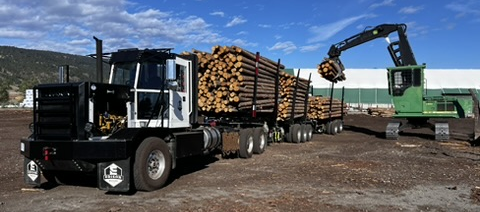
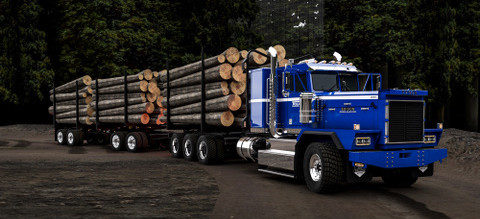
EL Those terms are industry standard practice. What I think is important to note is that the total market is enormous. It’s in the multiple billions of dollars because there are so many trucks on the road. However, there are many types of classifications and we’re not going after highway tractors. Our business model revolves around custom heavy-duty trucks. That would be logging, construction, and body trucks which demand a premium but also have more of an incentive to be electrified because their job is not just to move freight very cheaply. It’s also moving that freight and then doing an application on a work site. That application could be far more efficiently done using electrical power versus just having a big engine driving a small PTO (power takeoff). Idling and engine braking will be a thing of the past.
This is where we see a lot of our efficiency gains. These trucks demand an enormous premium by the end user in the first place because they are custom built, expensive vehicles. This is a massive truck market and we want to make sure our drive train is amenable to every type of heavy-duty vehicle including heavy-duty pickups. By building these electric heavy-duty custom vehicles we can enter the market confidently without competition. By producing the most complex vehicles first, we get closer to economically building a traditional highway tractor once we are up into production.
BE Now, let’s talk about the oil slick which Environment and Climate Change Canada dumped onto the highway in front of you last year. Give us an update on those regulatory complications.
EL Well, as of November of last year (2025), Edison has authorization from Environment Canada to place a label on our vehicles. This is a huge success for us, because it means that they impart trust that we are knowledgeable enough to know the regulations and can apply these to our vehicles. What was odd to us at Edison, is that the government, when writing the regulations, had not foreseen this technology. I know that when it comes to writing regulations, no one has a crystal ball, but the entire industry had foreseen that there would be bridge technology in the form of hybrids, which is what we’re building.
I found it a bit irresponsible that there wasn’t a potential exemption or alternative standard in the regulations for the use of a diesel generator engine. These are programmed totally differently than a traditional diesel truck engine. Why would the government want to restrict companies from building an EV hybrid? The way the hybrid regulations have been written requires the purchaser of an engine to recertify it, even if already certified in Canada, its bogus and needlessly confusing.
And that is why I was actually invited to discuss this point with the Federal Environmental Committee last November. I was well received, our points have been heard, and we’re working actively with the department to see if an amendment can be made, I think that by mid year, the regulation may be updated, but no promises. What is hopeful, is that by discussing this issue with the department, we potentially may receive approval regardless of regulation change. There may be an approval process granted directly from the department as we wait for this regulation change. We’re going to keep working with the department and hope this commonsense approach takes hold since using an off-the-shelf diesel truck engine as an electric generator is uncharted territory because of the way its computer is programmed. And, there are only so many off-the shelf diesel engines available in Canada. Wish us luck!
BE Where is the company at as far as the manufacturing facility? What are the next steps here for you?

“I’m shocked by how quickly we’ve been able to turn this diamond in the rough, this old sawmill in British Columbia, into a manufacturing facility for trucks where we currently support 40 employees. It’s been just an incredible journey.” Eric Little, CEO/Co-founder, Edison Motors
EL It’s surreal to think that it was about a year ago we purchased the property in Donald. A year later, we’ve built a three-kilometre test track and the walls are up on our new 30,000 square foot shop. We should have concrete poured sometime in February or March and we’ve been actively working on preparing the tooling. I’m shocked by how quickly we’ve been able to turn this diamond in the rough, this old sawmill in British Columbia, into a manufacturing facility for trucks where we currently support 40 employees. It’s been just an incredible journey.
BE You chose the town of Golden, B.C. as a manufacturing headquarters. I’m wondering what was behind that decision because not only did you relocate your original shop from Merritt, B.C., an even smaller town, but you had to build living quarters for your employees.
EL It’s a large 300-acre property with lots of space. It’s a former sawmill with active gravel quarry. There were trucks already rolling around the property every day. The only requirement of for building is to comply with B.C. coding standards so we are dealing with less regulatory framework.
But what is really special about this place is that we have access to the Trans-Canada Highway and a major rail line. This ensures we have the logistics framework to support large volume manufacturing. There are very few properties in British Columbia, where you can have, essentially, your own train yard on your property, allowing for intermodal transport.
But in addition, this location allows us to offer employees of Edison a great work-life balance. If you look at the surroundings, it’s breathtaking to work out here. It’s just magical to be able to work hard and then play hard. I think it’s an important concept for our company culture.
BE I’m also interested in this other component with which Edison Motors is involved and that is the Donald Business Development Park which the company is developing on the same parcel of land. Tell us how that came about.
EL Here is our thought process on that. Golden is a small community, and the infrastructure is quite limiting. It’s a beautiful town and we love that the community has embraced us. Golden is about a 20-minute drive away from Donald, where we’re headquartered, but there’s not a lot of new housing development taking place in Golden. We felt we could, in some ways, recreate this old mining town by bringing in employee housing. This is in fact why we were able to get all of our employees relocated so quickly. In less than a year, we were able to relocate 10 employees from Meritt because we built them houses.
This is common mining town philosophy. You build the town around your operation and the development park is very much amplifying this philosophy of Donald being rebuilt as a town here on our property. We want to make sure that if we’re going to employ and house people here that we can also provide some services to them, such as a grocery store and restaurants. We want our employees to be comfortable here and that they have the services they need to thrive. I think that this philosophy has helped us to succeed quickly.
BE That is a concept with a lot of vision, Eric. So, along this journey, Edison has become involved in many projects, but there is one in particular which caught my attention. Tell us about the story of the Burning Man generator bus.
EL Yes, that was a lot of fun. But it was also a great personal development journey for me, as well as a great test bed for what our technology can do. We were pretty surprised when the project landed on our desk. We were still located in Meritt and just building our first prototype when we were contacted by members of Robot Heart, a Burning Man technology group who were searching for innovative technology to power the main stage sound system for the Burning Man gathering in the Nevada desert.
We had a bit of a budget, so I said, ‘We have the technology that’s sitting right in front of us. Let’s do it.’ Less than a year later, we were down at Burning Man, converting an old 1960s British Leyland bus to power an incredible sound stage, with 24 massive subwoofers. We were able to build this incredible moving bus stage completely running off our batteries. It was a difficult project where we were experimenting with inverters to power all the electronics instead of running a massive diesel generator. It was awesome to see thousands of people dancing around our technology; what a great opportunity to showcase what we could do to a massive community of innovators and forward thinkers
BE That must be an extremely satisfying feeling to collaborate with those people.
EL It’s quite a movement down there to push the limits and see what’s possible. I’m looking forward to more projects like that.
BE Eric, thanks so much for telling us about this extraordinary mission of yours. We wish you luck as you continue down this road, no pun intended. All photos courtesy of Edison Motors