
While governments and automobile manufacturers wrestle to find the right balance to help solve the world’s emissions dilemma, the internal combustion engine continues to merrily motor along in the hearts and wallets of automobile enthusiasts. For these devotees, collector cars possess the specific qualities of mechanics, design, speed, provenance, and yes, investment growth that attract high worth individuals.
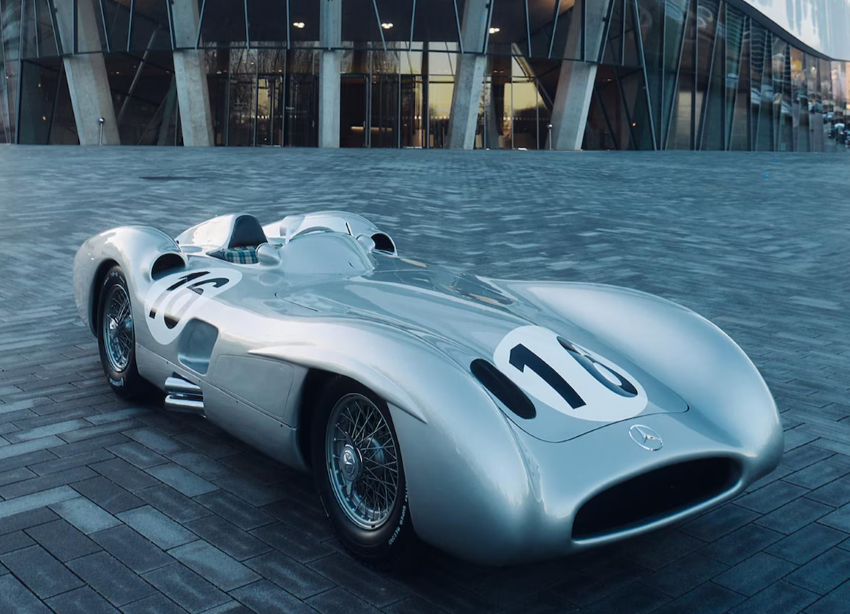
Escalating prices for the top collector cars confirm there’s continued strong demand for these vehicles. For instance, the brilliant 1954 Mercedes-Benz W196R Stromlinienwagen F1 auctioned off by Sotheby’s for US$53.9 million in February 2025 (the buyer’s identity remains confidential), was the most expensive vehicle sold in 2025 followed by a Ferrari 250 LM, also sold by Sotheby’s, fetching US$36.3 million. A 1955 Mercedes-Benz 300SLR Uhlenhaut Coupe, (named after its designer Rudolf Uhlenhaut) sold at (private) auction in 2022 for US$143 million, holds the record for the highest selling price. For most of these stratospheric level sales, only a limited number of potential buyers are invited to bid. We’ll talk about that particular echelon a bit later.
Meanwhile, the market for collector cars purrs along at all sorts of levels, providing opportunities for car enthusiasts of various financial status to build up their own herd of gasoline powered thoroughbreds. For car owners who acquire those collectors at more breathable levels, there is still significant investment upside. The RestoMod category, and its sub-category, Pro Touring, seem to be the major driving (please pardon all the puns) force in the overall current collector car marketplace. That’s according to Todd Schwindt, CEO and president of EG Auctions, located in the Central Alberta town of Sylvan Lake. As one of Canada’s largest car collector auction houses, EG has bought and sold thousands of vehicles in the past 20 years and has been exporting cars to the U.S. for 25 years. Schwindt says the various categories of collector cars are experiencing both upswings and downswings with much of the movement dependent upon the demographics of the buyers and sellers.
“For instance, “he says, “in the last four years we’ve seen about a 20% increase in prices for Pro Touring Cars and RestoMods. In the last two years, in the US, those prices have leveled off, according to our results, with the vehicles maintaining their value. But because, in the previous four years, that market had skyrocketed, this present market is considered as having plateaued.”
Generally speaking, RestoMods (Restored, but Modified) are classic vehicles which have been restored with modern mechanical and electronic components. Some restoration shops refer to this category as “Re-Engineered Classics.” Essentially, these are new vehicles except for the body. Replacing the original components results in a more powerful, fuel efficiency, better handling and safer vehicle. Vehicles fitting in the Pro Touring category undergo the same replacement of original components as in a RestoMod but with parts specifically manufactured to produce a higher performance vehicle while retaining the original body design. In addition, contemporary features like modern air conditioning, audio systems and interiors are incorporated.
“Where we are seeing a major decrease that started about four years ago is in the classic car category – vehicles produced between 1929 to 1954,” says Schwindt. “We experienced a correction of about 9% for classic cars in previous auctions. And in the previous four years, we had seen probably about 14% decrease in that category.”
Schwindt says the market for the “Muscle Car” category, those performance-oriented vehicles built between the mid-1960s and early 1970s, has also drifted downward, especially the more affordable cars purchased for everyday driving.
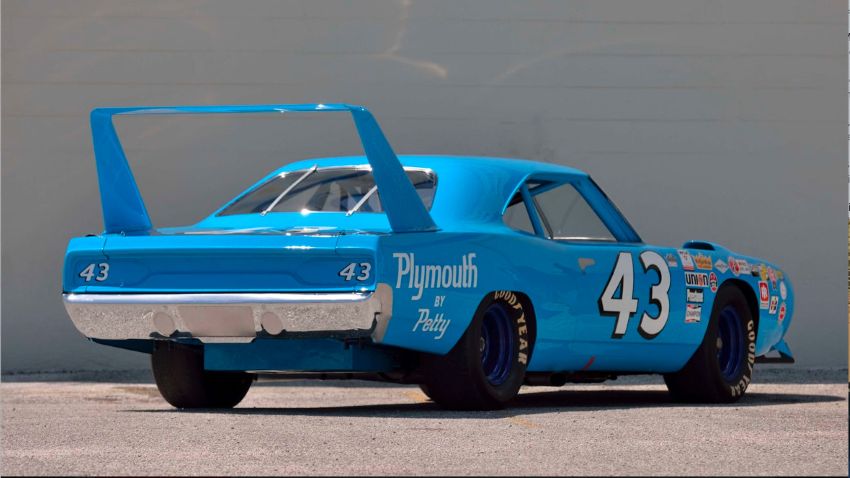
“For vehicles priced between $25,000 and $55,000 (CAD), we’re seeing a decrease. Those sales aren’t happening,” he says. “There are exceptions, though. What we’ve found that has maintained its value is the higher end of Mopar (broadly refers to vehicles produced by Chrysler) such as the Daytona Superbird. Those cars that have matching number blue chip investment cars are still holding steady in sales.”
The Superbirds are highly sought after not only because of their appearance, with a radically pointed nosecone and a huge tail wing, added for competition in NASCAR racing, but also because of their rarity with 1,920 built to qualify for NASCAR production requirements. As Schwindt points out, the Superbird market price jumped in value from $180,000 to $350,000 in a couple of years. But he says bidding for numerous other higher end muscle cars has also been consistent, especially those priced at above $100,000 (CAD).
“At our last sale, every car priced between $75,000 to $250,000 sold. In fact, we sold 100% of those in the last three auctions, while those put on the block at between $25,000 and $45,000 were sitting at about a 70% sale rate,” he says.
Based in Walworth, Milwaukee, Mecum Auctions is a major car collection auction house generating about $1 billion in annual total auction sales. Although Mecum, like other major global auctions, handles high-end vehicles, a significant amount of its business is derived from moderately priced vehicles in the $50,000 to $100,000 range, according to Director of Consignments, David Purvis.
“I would call those “bread and butter” cars because that’s the most active market,” says Purvis, who joined Mecum Auctions in 2010. “It makes it accessible for a buyer to own a good-looking car that is fully completed and one that you could take to car shows. It’s a good moderate price range in which to enter that collector car market.”
Based on his experience at Mecum, 45-60 years of age is the current prime demographic for car collector buyers. “This is the period when people get to a point in their life where they can own, maintain and enjoy a collector car,” he says. “They’ve done well for themselves and can buy a toy. It’s true that many people think of them as investments but really, it’s just something fun they can obtain with the money they’ve earned.”
But, as Purvis points out, the interest in collector cars is gradually moving towards a younger demographic – to those potential buyers 35 – 45 years of age. “I think we’re seeing the cars of the 1950s taking a step back in popularity and the 30-year-old vehicles are just now starting to appreciate in value,” he says. “The cars of the 1990s are what the collectors in that generation identify with. Those are the vehicles with which they grew up.”
For Jeff Hill, president of Enthusiast Collector Car Auction Ltd. (ECCA), another car collector auction house based in Western Canada (Okotoks, Alberta), the change in the marketplace for classic cars should come as no surprise. Hill says this significant transfer of enthusiasm to different categories of vehicles is part and parcel to the age of people that are buying.
“Those owners of vehicles built in the 1930s and 40s with significant collections are now aging out and so the vehicles of that era are becoming far more difficult to sell,” Hill says. “The current generation of enthusiasts who are buying and selling, frankly, have little interest in those vehicles. The Model As and Model Ts, those older cars, are harder to work with and the prices are not as strong as they used to be. The demographic of those in their 50s, 60s and even younger, grew up admiring those muscle cars and others that were produced in the 1960s and 70s. But then you have the age group growing up in the 1980s who were exposed to European manufactured vehicles. They would have been influenced through the media to admire say, Ferraris, as driven by television characters like Magnum P.I or the Lamborghini Countach in Miami Vice. Those cars are seeing a massive rise in values”
But, as Hill points out, there’s a younger car collector generation even more distantly removed from those classic car categories. Those enthusiasts have opened up a whole new collector category which focuses on Japanese imports and on Japanese Domestic Market cars (JDMs). The imports include brands such the Toyota Supra, the Nissan 300ZX and the Accura NSX. The JDMs refer to vehicles available only in Japan such as the Autozam AZ-1 and Toyota Century, but that category has further broadened to include Japanese cars sold throughout the world markets under different badges. “These vehicles have seen an incredible rise in value because those in the age group which grew up admiring those cars now have the funds to purchase them,” says Hill.
But what are the realistic expectations for collectors at this level of purchasing/ selling/investing?
“It’s a very interesting kind of world to be in,” Hill says, “because in large part, it’s very much driven by the hobbyist – people looking to acquire a vehicle that they grew up with. Perhaps their father or someone they knew owned one or they had seen vehicles on TV and put up posters in their room, so they always wanted one. As a hobby they might put a lot of money into fixing them and upgrading them. That doesn’t necessarily translate into investment from a monetary standpoint, but there’s a tremendous amount of life enjoyment that you get out of it. The way I put it, there’s more than one currency in life, and cars often will feed the emotional currency in a lot of ways.”
“On the other hand, there are specific vehicles that are always extremely good investments. There’s the buy and hold scenario where the market continues to escalate. There could be vehicles that emerge because restrictions are lifted allowing vehicles into the country. Enthusiasm could arise for vehicles that are now attainable, that weren’t previously attainable. There are all sorts of different spectrums resulting in this kind of culture in which people get involved. Some make money, some lose money. But it’s just as often about motivation. Do they want to enjoy the vehicle and don’t care if they take a bit of a bath? On the other hand, there are those who won’t buy a car unless they make money. In this case, I’m not necessarily talking about the people that flip vehicles for a profit. I’m talking about enthusiasts that want to own something for a while and then the market does what it does.”
While these new groups of buyers are shifting the focus to new car categories, there’s another smaller but hugely relevant category of vehicles that consistently sells well amongst all demographic groups. The vehicles in this category might fit into what Hill calls “rolling celebrities.” Those are known as supercars/hypercars. The definitions of these two terms are a bit nebulous but generally speaking, for supercars, the design and performance of the vehicle take precedence over purchase price while for hypercars, the design, performance and cost simply accelerate to a dizzying level.
“The market for super cars is obviously smaller because it takes deeper pockets to participate,” says Jeff Hill with ECCA in Okotoks. “I’ve sold many supercars over the years as well as having owned a few. It’s crazy how the values jump for these vehicles. Just in 2019, we sold a gated (traditional open‑gate, metal 6‑speed manual shifter, rather than the later paddle‑shift “e‑gear” automated manual) Lamborghini Murcielago. The manual is more sought after than the paddle shift vehicle. We sold that vehicle for about $220,000 at the time. Now it would probably sell for about US$600,000.”
Hill says those cars are wonderful to have on the docket because the buyers are very knowledgeable, and once purchase is made, the transactions go very quickly.
Moving into the hypercar level, state of the art design, advanced technology and low production numbers combine to establish value. The term “hypercar” (the term is registered, by the way) originated in the 1980s by the physicist Amory Lovins who founded the non-profit Rocky Mountain Institute (RMI), an organization devoted to improving energy practices. Lovins’ Hypercar® was a conceptual vehicle that “combines ultralight and ultraaerodynamic design, a hybrid-electric drive system, and other features to achieve very high fuel efficiency and very low emissions.”
There’s an irony which accompanies this narrative in that a 1998 document authored by Lovins called “Hypercar® Vehicles Frequently Asked Questions” states that no Hypervehicle® have yet been built. But by the time this document was published, the term hypercar had already been hijacked, if you will, by automotive journalists to apply to the most cutting edge and powerful vehicles being manufactured.
The iconic McLaren F1 is, by many, considered one of the original hypercars. First released for public purchase in 1992, it was the first road car to use lightweight carbon fibre for incorporation into the full shell of the vehicle. A modified version became the winner of the 1995 24 Hours of le Mans. The irony referred to above is that the F1 set the record for the world’s fastest naturally aspirated road car (an internal combustion engine without the use of a turbocharger or supercharger) at the time. It had no electric drive components whatsoever.
A 1994 F1, incidentally, became the star of the RM Sotheby’s Abu Dhabi Auction in December 2025, as it was auctioned off for a price of $25,317,500. The provenance of this car includes the fact that it was the 14th of 64 road cars manufactured in McLaren’s Woking, England factory and purchased by the Brunei Royal Family.
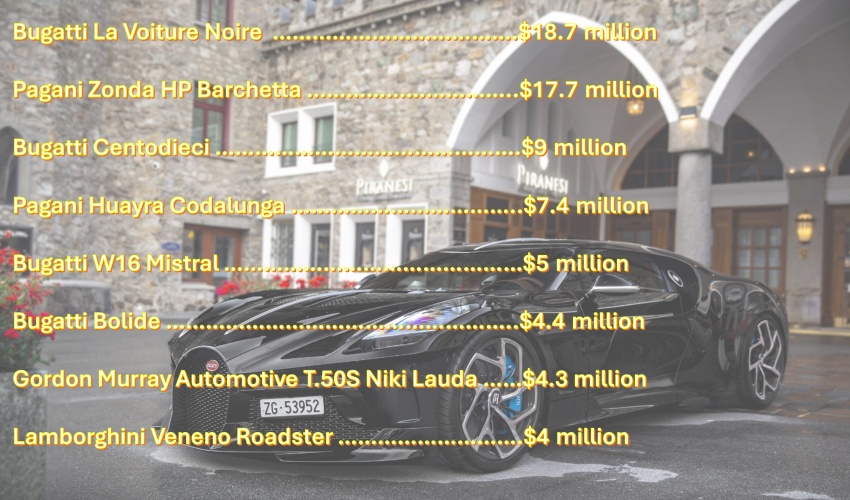
While the McLaren F1 created the template for hypercars, there are a number of noteworthy vehicles that have, and are continually, setting their own standards for design, performance and, let’s not forget, price. Here’s a sample list of the most expensive hypercars available at this time as compiled by SlashGear Magazine (local taxes, import fees, insurance and maintenance costs not included).
Paddles or clicks? Live or online bidding?
It’s inevitable, of course, that the Internet has elbowed its way into car auctions and auctions of all kinds, for that matter. For many auction sales, the excitement and buzz of two bidders duking it out standing beside the vehicle for sale has been replaced by online photos or live streams of the auctioneer with the bidders sitting at home ready to pounce on their keyboards.
Todd Schwindt with EG Auctions says he is still a fan of live auctions and that’s one reason why the company continues with that format. “I prefer online auction for certain auctions, for instance, estate sales, but there’s nothing like a live event auction. You can’t beat the atmosphere and energy at a live event. We’re probably one of a few live auction event companies that is left. Just about everybody has moved to the online format but we’re going to maintain that live atmosphere.”
David Purvis with Mecum auctions, says he wouldn’t buy a car without seeing it in person, or at least have someone who he trusts and understands old cars to examine the vehicle. “But there are many people who will buy a car sight unseen,” he says. “They may not have the time to make a trip to auction if they are looking for just a single vehicle. And since our auctions use online bidding as well as phone bidding, we will have our qualified staff members do an inspection, and let the buyers bidding over the phone know exactly what they’re buying when it comes to condition. That is one advantage over the internet, since logging onto a website, you’re essentially making a judgement based on the photos and description on the website. If the buyer can’t be there in person, we’ll gladly get them on the phone and be their eyes and ears during the bidding. All of our auction staff are car guys, so they can all be trusted to give an honest representation of the car.”
For Jeff Hill and ECCA, making the move online has turned out to be a very positive business model. “Our switch to live viewing and online bidding was precipitated mostly by the COVID situation,” Hill explains. “But we found that we gained a lot of traction with that move. With online bidding, we found that our numbers started to significantly improve, plus, we were selling abroad in a way we had never been before.”
It is important to point out the ECCA auctions are “hybrid” auctions in that cars are available to be viewed in person. This has allowed out of town and even out of country buyers to hire local appraisers to inspect a potential vehicle to supply a third opinion and verify that what they are looking at online is what has actually been built.
Hill says the satisfying part of this model is people can drop in on a Saturday morning to view the vehicles up for bidding, walk around, have a coffee and hang out with their buddies. Then they can go home and place a bid if they want or react to bids that are coming in while still being able to buy the car.”
“We found this has worked wonderfully,” he says. “Most importantly for us is, we’re selling in areas we have never sold before. That is a function of the online profile, the marketing we do, and the ease with which you can now acquire a vehicle.”
The upscale global market
While auction houses like EG and ACCA power the mainstream car collector community, car auctions like RM Sotheby’s, Mecum Auctions, Artcurial, Barrett-Jackson, Bonhams, Gooding & Company and Silverstone Auctions, to a large extent, cater to the ultra-high-end bidders. You would be hard pressed to see these vehicles anywhere else but a climate controlled, security surrounded, storage facility.
As mentioned earlier in this article, Sotheby’s holds the record for highest price paid for a motor vehicle at auction – US$143 million, for a 1955 Mercedes‑Benz 300 SLR “Uhlenhaut Coupé – sold in 2022. At the time, it doubled the previous record price of US$70 million which had been paid for a 1963 Ferrari 250 GTO purchased by WeatherTech CEO David MacNeil.
London-headquartered Bonhams has been an integral player in that purview. Founded in 1793, the auction house entered the automotive field in 1999 after merging with Brooks Auctioneers which specialized in motor cars and by 2014 made its mark with the sale of a1962 Ferrari 250 GTO Berlinetta for $38,115,000. That sales price held the record until 2018 when another 1962 Ferrari 250 GTO sold for $48.4 million by RM Sotheby’s at Monterey, followed by the sale of the Stromlinienwagen and the Uhlenhaut coupe.
While Bonhams does list moderately priced vehicles in its auction catalogue – those tend to be part of estate auctions – the auction house focuses on exceptional vehicles with distinguished provenance such as the Ferrari 250 GTO.

That’s that type of vehicle car collectors collect,” points out Allan Greenfield, automotive specialist at Bonhams’ New York office. “They’re special because they’re usually produced or only available in limited numbers.” That’s the case with Ferrari 250 GTO. It was the 19th of 35 built and is considered unique because it could be driven on the road and competitively on the racetrack.
When it comes to the supercar category, Green is bullish. “While I see the 80s and 90s vehicles as the primary 2026 market, I also see supercars as a hot commodity. Take for instance, pre-merger AMGs (an independent German engineering firm founded by former Mercedes‑Benz engineers Hans Werner Aufrecht and Erhard Melcher, specializing in building and tuning racing engines for Mercedes cars), meaning cars that were produced by AMG prior to acquisition by Mercedes-Benz in 2005. We’re still seeing that as a very strong market. These are poster cars that were tacked kids’ walls in the 80s and 90s.”
“If you’re going to focus on a particular market, I think Lamborghini Diablos are very good buy right now, when you compare them to their counterparts at Ferrari, for instance, a Ferrari F40, which was produced from 1987 to 1993. Those cars could be traded today for $3 million plus, About 1,300 of those cars were built. Or take the Lamborghini Diablo, of which about 3,000 were produced between 1990 and 2001. That car trades around the seven-figure range, anywhere from $800,000 to $1 million dollars. I see a car like that gaining significant value over the next five to seven years. It may not reach the levels of an F40, but should reach a value of $1.5 million to $2 million.”
Dwelling in the stratosphere
Just for interest’s sake, and to illustrate the factors which determine the value of a car, let’s indulge in speculation. Given that the Ulenhaut currently holds the record for the highest price of a vehicle and given that it is one of two built by Mercedes-Benz, is there an existing vehicle that could take over that number one spot? Based on numerous sources that also speculate about this question, the consensus is that another Mercedes-Benz would hold that honor – the Mercedes-Benz 300 SLR – “722.” One of Mercedes Benz’s illustrious Silver Arrow stable of race cars, the “722”, driven by the venerated Stirling Moss and co-driver Denis Jenkinson, is famed for its celebrated victory in the 1955 Italian Mille Migliais race. As Moss described the vehicle in a 2015 interview “The 300 SLR was the finest car ever built.”
To put the value of the “722” in context, it was not built as a one-off. It was one of nine 300 SLR chassis built with various body styles under the company’s 1955 World Sportscar Championship program for a series of road races. Included in that chassis group were the two road‑legal hardtop Uhlenhauts with their gull-wing doors and powerful 2.5L straight eight engines. With more than 300 horsepower and a top speed of 290km/h, they held claim as the fastest vehicles of their day.
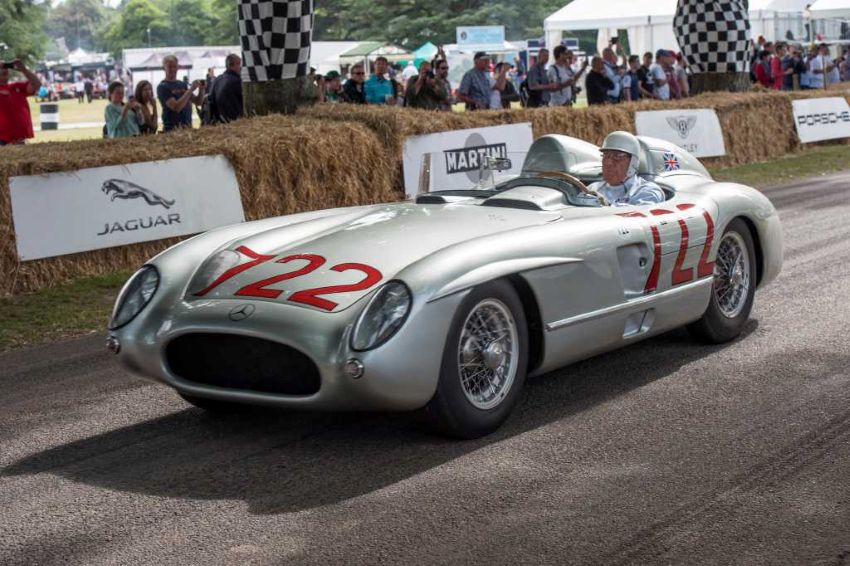
Photo courtesy of Daimler AG
In contrast to the hardtops, the 722 is an open roadster, purpose-built for road racing (in the strictest sense of the word) such as in the Mille Migliais mentioned above. The number “722” refers to the race start-time – 7:22 a.m. – for Moss and Jenkinson. The uniqueness of the car derives from the combination of vehicle design and construction, its race history and that famous Stirling Moss quote. Thus, the car’s provenance plays a crucial role in creating its value and its potential to be the highest selling vehicle. To be clear, the chances of that ever happening are virtually nil. Mercedes did sell off one of the two Ulenhauts in a private auction using the funds as seed capital for its non-profit global fellowship program “beVisioneers” which financially backs young people who have proposals for environmental projects. Both the Ulenhaut and the “722” remain on permanent display at the Mercedes-Benz Museum in Stuttgart, both serving as brand icons and unlikely to be released for auction or into private collections.
This section is to be placed below the main article in a separate, lightly shaded color. Try a light blue
Headline: The ultimate 1980s poster car
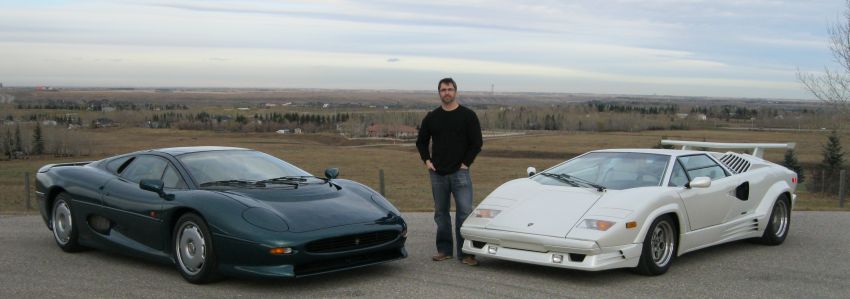
If you have a passion for cars, you’ll be quite envious of Jeff Hill, president of Enthusiast Collector Car Auction Ltd. Of Okotoks, Alberta. Hill is the former owner and driver of two very special cars with incredible pedigrees, the 1994 Jaguar XJ220 (left) and the1989 Lamborghini Countach Anniversario (right).
The Countach Anniversario, which was tacked to the wall of many a pre-teen’s bedroom in the 1990s was a farewell to this icon, giving way to the Diablo model the following year. Hill regards this vehicle, with a 5.2-liter, 455 horsepower V-12 as undervalued at approximately US$700,000. According to The Classic Valuer Magazine, it is placed amongst the most expensive 1% of collector cars across the publication’s database.
According to Jaguar Daimler Heritage Trust, based in Gaydon, Warwickshire, UK, the XJ220 was a limited production supercar, to match the Ferrari F40 and the Porsche 959. A total of 281 XJ220 cars were produced by Jaguar Sport between 1992 – 1994. It originally sold at a list price of £400,000. The top speed was around 213 mph (343 km/h) the fastest production car in the world at that time. It held the Nürburgring Nordschleife production‑car lap record in the 1990s, and won a contested GT‑class at Le Mans in 1993. Hill, who owned both vehicles for seven years, feels the Jag should soon be worth $1.5 – $2.5 million considering its high-level performance and its rarity.