
By Ernest Granson
Several years ago, a peculiar phenomenon arose in some children who were regular viewers of the hugely popular Peppa Pig animated kids’ program; they seemed to be acquiring refined British accents, much to the puzzlement of their parents and the bemusement of their parents’ friends. As described in a number of articles published about that time, five-year-olds were asking parents to “turn on the telly,” and calling their mothers “mummy.” A six-year-old requested that her mother bake a mince pie for Father Christmas. Not that it was a huge concern for these parents, but it was certainly a little baffling. Just to confirm, for these children, their North American accents did resurface as they grew older.
But it is a sign of the significant influence that production companies, along with manufacturers and retailers of associated merchandise, have on children. Video streaming has turned this generation of toddlers and their parents into an important market. Capturing that market has spawned numerous enormous corporations. In this article, we’re going to take a look at several of those companies who have captured the hearts of children and the wallets of their parents, including the Canadian giant Spin Master (Paw Patrol), Astley Baker Davies/Entertainment One/Hasbro (Peppa Pig), Nickelodeon/Paramount Global (SpongeBob Squarepants), and several others.
Because of audience and technology fragmentation there really is no definitive single measurement of total global or country viewership of any program (children, adults or any particular genre). But based on the various data gathering and analytic platforms, demand for children’s programs is increasing significantly. According to Parrot Analytics, pre-school content increased worldwide across all platforms by 25% with school-age content increasing by 21% between 2024 and 2025.
As far as the popularity of specific shows, Neilsen Co. LLC’s streaming content ratings list for January – June 2025 shows that the hit kid’s show “Bluey”, distributed by Disney + from Australia, is not only the top viewed children’s show in the U.S. but had more streaming views – 25 million minutes of viewing – than any other program, as well. Spongebob SquarePants placed sixth in that category in the U.S. with more than 16 million viewing minutes.
On the same viewership level is that amazing pack of rescue hounds, the Canadian owned and produced PAW Patrol. Here we must shift to a different source and different methodology to draw a compatible comparison to other programs. The latest numbers to be found come from Netflix’s 2023 Engagement Report. Here is where PAW Patrol rules, showing almost 150,000 hours viewed between January – June 2023 for season 6 and more than 130,000 hours viewed for season 5, not to mention a YouTube subscription base of more than 10 million.
Other wildly popular kid’s programs are Masha and Bear, produced by Moscow based Animacord Animation Studio. For the same time 2023 period it had a viewership of 66,700,000. Netflix’s Engagement Report for the second half of 2023 shows Cocomelon, originating in Irvine, CA, and now owned by Candle Media, was the most watched children’s show during that period with more than 200 million views.
Peppa and her menagerie of friends
Peppa Pig, too is ranked in that upper echelon. If you are raising or have recently raised, a toddler, chances are high you have succumbed to one or more earworm infections from the Peppa the Pig universe, e.g., “jumping in muddy puddles,” The pink porker has been a beloved staple of children’s characters since its initial production in 2004. While Peppa first aired in Britain, it has gained an enormous presence all over the world, registering nearly 82 million hours viewed in the first six months of 2023 for season 1 and almost 46 million hours for season 6. According to Peppa’s official YouTube channel, the show has almost 43 million subscribers. While those statistics are impressive, think about these numbers. Asia and, especially, China, have eagerly embraced the platform to the tune of 34 billion (or 16 billion, depending on the source) views on social platforms.
Peppa Pig was born about 20 years ago in the London-based studio Astley Baker Davies (ABD) named after animators Neville Astley, Mark Baker and producer Phil Davies. Like many children’s programs, the Peppa Pig series was created by parents who were dissatisfied with the quality of children’s animation. As Phil Davies expressed it in an interview with The Guardian several years ago, “I was shocked at how poor some children’s animation was. Not just the production values – the stories didn’t even seem to have a beginning, middle or end. A lot of it was completely incomprehensible and all the girls were either princesses or ballerinas.”
Starring the four-year-old Peppa, along with her brother George and Mummy and Daddy Pig (new piglet sister Evie arrived recently as well), the series first aired in May of 2004 featuring simple story lines to which millions of children around the world seem to relate. The series aired in the United States the following year. By 2007, Peppa had become popular enough that Entertainment One (eOne) a major Canadian-based entertainment company entered into a 50-50 joint venture agreement. eOne’s role was to distribute the show world-wide. The company, at the time, had already become a global conglomerate of acquired distribution, film, television and music businesses, originating from a record shop in Halifax, Nova Scotia and started by young businessman by the name of Darren Troop, originally from the small town of Bashaw, Alberta.
That same year, eOne listed on London’s AIM exchange through a cash shell set up by Marwyn Investment Management LLP, a London, UK-based equity firm. In 2010, the company made the move over to the London Stock Exchange.
In 2015, eOne purchased a 70% controlling stake for $212 million for Peppa and the Astley Baker Davis studio became a subsidiary. eOne issued $293 million in shares to finance the deal with the balance to pay off debt. By that time, ABD had already produced more than 200 episodes and signed on to produce another 52. Those episodes were showing in more than180 territories with more than 700 licensing agreements and generating $1 billion (USD) in retail sales annually, according to eOne.
In 2019, Hasbro, the multinational toy manufacturing and entertainment holding company, came calling on eOne. With major franchise brands such as Monopoly, My Little Pony, Transformers and many others under its umbrella, Hasbro had noticed both Peppa Pig’s growing popularity as well eOne’s considerable portfolio and acquired the company in an all cash purchase for $4 billion. In explaining the strategy behind the acquisition, Hasbro CEO, Brian Goldner, stated “The addition of eOne accelerates our blueprint strategy by expanding our brand portfolio with eOne’s beloved global preschool brands, adding proven TV and film expertise, and creating additional opportunities for long-term profitable growth.”
That strategy changed only a couple of years later when Hasbro sold off eOne’s music division to the Blackstone owned SESAC, a private, for-profit music rights agency. The change in direction became even more apparent with a change in leadership necessitated when the highly respected Goldner succumbed to cancer in October of 2021. His successor, Chris Cocks announced in November 2022 that Hasbro would be putting eOne’s television and film business, and its 6,500 title library, up for sale as well. The sale did not apply to brands like Peppa Pig and Transformers. Those two properties would not only be added to Habro’s major franchise list but would also receive investment boosts. In late 2023, Lionsgate Entertainment Inc. (NYSE: LION), a Vancouver based entertainment production and distribution company, scooped up the television and film unit for $500 million.
Darren Throop, who nurtured Astley Baker Davis and Peppa, left eOne at the end of 2022, following expiration of his contract. Throop tends to keep a low profile but last reports show that he is the board chair at Imax Corp. as well as director in various other boards including the International Academy of Television Arts & Sciences.
Peppa Pig, meanwhile, under the wings of Hasbro, has gone onto new heights, with not only the expected accompanying merchandising revenue streams but also with the opening of major theme parks, first in the U.K. and then Germany and Dallas-Fort Worth.
“The Peppa Pig phenomenon is by no means the most remarkable illustration of children’s programming in recent years. Spin Master’s “Paw Patrol,” Nickelodeon/Paramount’s “SpongeBob SquarePants,” Candle Media’s “Blippi” and Michael Moore’s “Brain Candy,” have all made their mark in this popular domain. For an in-depth look at each of these examples. log on to Business Edge’s Spring 2026 online version at https://businessedgemedia.ca/
Trouble shooting crew to the rescue!
The original six puppies of the PAW Patrol™ (Chase, Marshall, Skye, Rubble, Rocky, and Zuma) along with their human leader, Ryder, and their technologically advanced vehicles and equipment are constantly bailing out the citizens and mayor of Adventure Bay. That crew, along with various additional characters, such as Everest, Rex and Liberty, added over the seasons, have catapulted the Intellectual Property (IP) rights holder, Spin Master, into one of the world’s most successful children’s toy and entertainment companies.
Based in Toronto, Canada, Spin Master’s rise to the top of that business list is considered a master class in licensing and acquisition. Two Canadian entrepreneurs, Anton Rabie and Ronnen Harary co-founded the company in 1994 (originally named Seiger Marketing). Born in South Africa but raised in Canada, they began their business journey selling fertilizer to Toronto area residents and, while attending Western University, selling posters to fellow students.
According to an interview with the Globe & Mail back in 2018, Harary and Rabie were inspired by a novelty item brought back from Israel by Harary’s grandmother – a nylon stocking miniature head filled with sawdust and grass seeds which sprouted “hair” when watered. Having just graduated, the two friends were looking to start up a business of their own and decided to produce their own version of the grass seeded head, assembling them in the home of Harary’s mother. They sold the first few “Earth Buddies” as they called them, on the streets of downtown Toronto. Sales went so well, they took the plunge. Recruiting Ben Varadi, a Western University classmate, they charged $10,000 to their credit cars, hired workers from local homeless shelters and produced another 5,000 products. After that batch, too, sold out, Kmart Canada submitted an order for 26,000 Earth Buddies, and within months asked for another order of 500,000. Their first crack at the world of marketing novelty items had generated more than $1.7 million. That episode planted the seed (pardon the pun) for Spin Master’s road to phenomenal growth in the children’s toy world.
Over the following years, the three entrepreneurs developed numerous best-selling toys and assembled a significant catalogue of product licences through periods of growth, but also of struggle. By 2000 they had been named as Entrepreneurs of the Year by Ernst & Young and the company had been recognized as one of Profit Magazine’s Fastest Growing Companies, as well as one of Deloitte’s 50 Best Managed Private Companies. The company pursued a strategy of corporate acquisitions and also expanded internationally, opening offices in China, Europe and Angeles.
Spin Master entered into a pivotal stage in 2007 with the introduction of its most successful product up to that point – the Bakugan transforming balls, developed in partnership with the Japanese company, Sega toys. The toys were wildly popular among 5 to seven-year-old boys. Just as significantly, the toy was eventually adapted into an animated television series opening the door for a content creation component for Spin Master. The company opened its entertainment division the next year, producing a variety of episodic programming for television, streaming, and film.
While Spin Master continued to expand its lineup of toys, the entertainment division jumped to another level with the production of the PAW Patrol series in 2014. That production emerged from the company’s search beginning in 2010 for an opportunity to create an original IP for the preschool ages of two to five combining entertainment with merchandise.
Spin Master requested requests for proposals from a number of creators including Keith Chapman, a graphics illustrator and former art director for Jim Henson Entertainment and HIT Entertainment. Chapman went on to start his own company which created and produced the immensely popular kids’ show, Bob the Builder and others. The concept which Chapman pitched to Spin Master was originally called Robbie’s Rescue Dogs, as he explains in an interview with Glitter Magazine. That concept was chosen by Spin Master as its next big step into content creation. Chapman says he used his experience as an art director where he developed campaigns for many different products to sell the PAW Patrol concept to Spin Masters. “It was all about finding the USP, the “unique selling proposition” of that product, finding the big idea,” he says.
For Chapman, PAW Patrol became his second major successful production after Bob the Builder; for Spin Master, the production exploded into an enormous multi-headed children’s entertainment monster after it aired on Nickelodeon in 2014. That platform included not only the television series but toys, clothing, numerous licenced products, and eventually two feature movies released in 2021 and 2023. A third movie is scheduled for release in 2026. Two live touring shows also brought in record audiences and there are seven theme parks which feature dedicated PAW Patrol sections.
While Keith Chapman is credited with the creation of PAW Patrol, he sold the rights to the concept as an IP to Spin Master prior to its television debut. Guru Studio, based in Toronto is, and has been, responsible for the show’s production
The marine biologist who became the creator of a children’s iconic television show
Not surprisingly, SpongeBob SquarePants had its origin in the ocean, literally. It was Stephen Hillenburg who conceived of a kids’ program about a sponge living in a pineapple under the sea surrounded by various ocean creatures like Patrick the starfish, Mr. Krabs, a greedy crab and the crotchety octopus Squidward. Hillenburg had a passion for the ocean even as a young boy, surfing, snorkeling and watching “The Undersea World of Jacques Cousteau.”
He graduated in 1984 as a marine biologist with a minor in art. As a marine scientist educator at the Ocean Institute in Dana, CA, Hillenburg put his art minor to good use by producing a scholastic comic book called the Intertidal Zone to introduce his students to the world of tide-pool animals and coastal ecology. It was in this publication that Bob the Sponge (minus the pants) made his first appearance as the narrator.
The comic book was distributed only within the marine institute and to local school groups but it seemed to ignite Hillenburg’s enthusiasm for animated television because later that year he entered the California Institute of the Arts’ Experimental Animation program. After graduating, his next move saw him gain valuable practical experience as a storyboard artist, producer and creative director on a somewhat obscure and edgy cartoon carried by Nickelodeon called “Rocko’s Modern Life.”
Hillenberg spent three years on that show, picking up valuable practical experience which he used to build his pitch to Nickelodeon. In his presentation to Nickelodeon executives, Hillenburg came dressed in a Hawaiian shirt and brought along an aquarium with little versions of the characters inside, according to Eric Coleman, vice-president of animation development and production at Nickelodeon 1992-2008. Hillenburg described Sponge Boy (as he was named at the time) as “a single male sponge who resides in a fully furnished, two-bedroom pineapple with an abnormal love for his job at ‘The Crusty Crab,’ fast food restaurant.” Here’s the link to Hillenburg’s original “Sponge Boy” pitch bible to Nickelodeon including the above description.
/gallery?file=SpongeBob_SquarePants_pitch_bible_-_original_draft_page_1.jpg)
The executives were quick give their blessing to the quirky and offbeat show and it aired in the summer of 1999. Children aged 2 – 11 responded immediately, with Nielsen ratings of an average of 1.9 million viewers on Saturday mornings, taking over from the top-rated Saturday morning cartoon – Pokémon™.
That popularity continued to increase consistently over the last 27 years or so since the show debuted. According to industry publication Collider Magazine, the show, which airs in 180 markets, averages 90 million viewers each quarter. The first SpongeBob feature film in 2004 grossed $141 million worldwide. The second feature film in 2015 grossed $325 million. The third film was released in 2020 during the COVID-19 pandemic and brought in about $4.8 million, mostly from PVOD-streaming. The fourth movie, was released in December of 2025 and had grossed about $63 million to the end of the year. A fifth film is in the works and scheduled for release in 2027. Not to be forgotten are the 300 performances of the musical on Broadway in 2016-2018. Although the New York Times reported mixed reviews, the show received 12 Tony nominations at the 2018 Tony Awards.
As you might expect, SpongeBob merchandise and other products have been lucrative revenue streams for Nickelodeon/Paramount ever since the show’s popularity exploded shortly after debuting. Various business reports over the years, including this one from Forbes Magazine in 2024, place the total consumer spend at retail (for SpongeBob related toys, apparel, accessories, home, food, promotions, etc.) at $16 billion. The Forbes article does not specify how the writer obtained that information but based on Nickelodeon’s consistent consumer product launches it’s reasonable to assume that dollar number is in the ball park.
How powerful has the SpongeBob SquarePants brand become? Here’s an abbreviated list of what’s available: clothing for adults and kids, fashion products and accessories, toys, action figures, stuffies, games, collectibles, bedding, kitchenware, bathroom items, and small décor, stationery, bath and body products, cosmetic accessories, branded foods, storybooks, comics, coloring books, packaged/digital media.
There’s no sign of the franchise slowing considering the next film expected to be out some time in 2027. Unfortunately, the much-beloved creator Steven Hillenburg was not able to enjoy the last few years of his efforts. Hillenburg passed away in 2017 from complications of ALS.
Blippi dances and bounces his way to brand paradise
The story of Blippi, the kids’ video host with the orange suspenders and Elton John glasses is a familiar one: well intentioned person, unsatisfied with the quality of children’s programs, creates character, produces videos, uploads to YouTube, goes viral, sells to Netflix, is acquired by large streaming platform.
That is pretty much the journey for Stevin John, who began his career in video production and marketing, after two years with the United States Air Force. In 2013, John became motivated to create his own kids’ videos while watching YouTube with his two-year-old nephew. The Blippi brand was not built randomly. According to a July 2025 interview with John by Parents Magazine, he explained that he carefully chose a short, happy sounding name and selected the colors blue and orange to appeal to children. Copyrights and trademarks were taken out. The first Blippi video was uploaded to YouTube in 2014 and it was John who handled the filming and editing himself. Those first videos were filled with tractors, construction vehicles, fire trucks, garbage trucks, and animals. John paired those topics with colors, shapes and numbers, quickly attracting substantial viewership. Over the years, the Blippi shows expanded to include science experiments, videos about various jobs, how to build and make things (like ice cream) and many more topics.
Producing Blippi became a fulltime occupation for John by the end of 2014. By that time, he says in an interview with the K-Swiss podcast CEOs Wear Sneakers, his videos were receiving a million views. Even that number of views, he said, was barely enough to pay the bills. At the time of the podcast interview, in 2018, the shows were receiving about 400 million views per month, John said. The connection, incidentally, between Blippi and K-Swiss is the cross-branding venture for the blue and orange sneakers designed and sold by K-Swiss since 2018.
With the Blippi brand moving into that desirable level of public recognition, it’s no surprise that a merger/acquisition phase came next. Into this emerging lucrative landscape, entered two separate ventures founded by existing media executives on parallel business trajectories – essentially, buying up surging children’s intellectual properties.
Danish entrepreneur, René Rechtman, who served in various executive positions in media, advertising and streaming, founded Venture Number 1, Moonbug Entertainment Ltd., in 2018 with John Robson and Alfred Chubb, both of whom held similar roles with streaming/digital companies. They were able to raise $159 million in equity to kickstart their acquisition strategy.
In an interesting blog by Alex Prokofjev, who together with his brother Pavel, post under their platform “RollupEurope”, Prokofjev pointed out the amazing climb by Moonbug to its four-year, $3 billion exit in 2021, piggybacked on the acquisitions of three highly viewed children’s IPs: Blippi, Cocomelon and Litle Baby Bum. Those acquisitions, along with many others, helped Moonbug’s revenue grow by 71% in 2020 to $53.8 million.
Little wonder that Candle Media LLC, another media venture, founded by a couple of fellow Disney executives, approached Moonbug in 2020 for a buyout of about $3 billion. Candle Media’s founders are Kevin Mayer and Tom Staggs, both of whom spent time with The Walt Disney Co. Their strategy mirrored that of Moonbug, except for the fact that Candle Media made the acquisition backed by investment capital from the colossus alternative asset manager, Blackstone Inc. Candle Media, incidentally, has a wider scope of products than children’s programs. The company also acquired the Reese Witherspoon-founded media company Hello Sunshine in 2021 for about $900 million.
Blippi, meanwhile, has expanded his video experiences to other life areas such as the “Job Show” where he interviews truck drivers, mail carriers, firefighters and even astronauts. He has also brought in new characters such as best friend Meekah who helps him explore the world and, gulp, a second actor to split duties with Stevin John. That change was not welcomed at first by parents, but we haven’t heard about any negative reactions from the true fans of Blippi’s shows – the two to five-year-olds.
Making the distribution leap
Hearing from the hugely successful programs above, you would think creating and producing children’s shows would be a slam dunk, but that is not the case with all programs. Next, we will hear from a Canadian creator/producer who first launched a series of high production quality kids’ videos in 2014 with the drawing attraction of monster trucks while incorporating educational elements of numbers, colors and shapes, not mention Lizzy the dog.
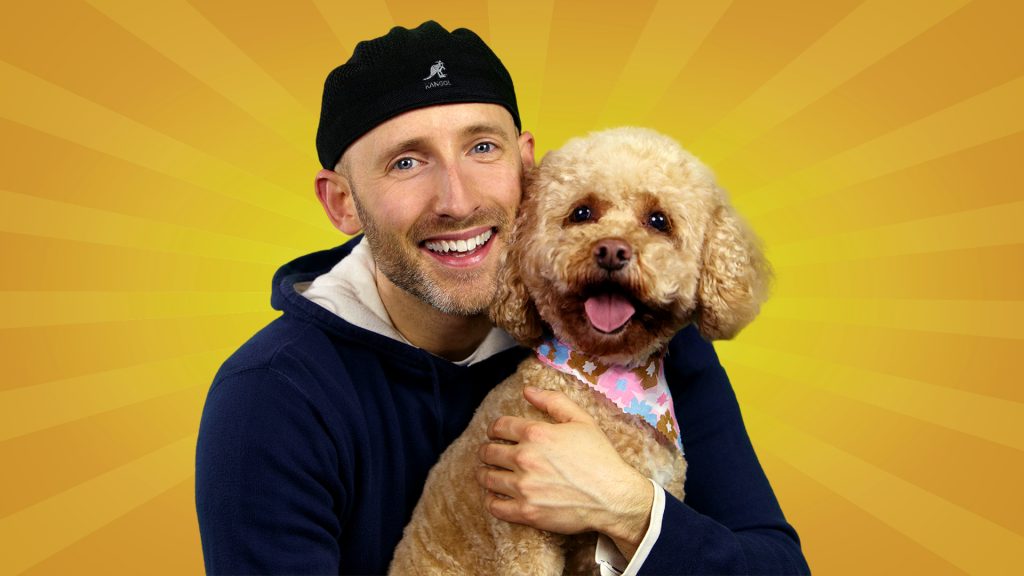
Based in Milton, Ontario, part of the Greater Toronto Area, Michael Moore jumped into the children’s programming field because of his passion for education and his love of video production. While “Brain Candy” hasn’t attained the viewer or financial height of Blippi or Peppa, Moore has nevertheless provided a consistent level of quality for young viewers for more than 10 years. Business Edge Magazine recently chatted with Michael Moore as he described his catalyst for creating children’s educational videos.
BE What was your motivation for taking on the challenge of producing videos for children alongside your fulltime work?
MM When I started Brain Candy TV, I had been a wedding and portrait photographer for about 13 years. Due to changes in the industry and a drastic increase in competition (plus a desire to try something new), I decided to make the move into a new career and consulted a career councillor to help me plan my path forward. She really helped me hone- in on my values and what kind of career opportunities would bring me the fulfillment that I was seeking. Around the same time, I had been doing some volunteer video production work for an educational charity in my spare time and I really enjoyed marrying my passion for education with my love of video production and 3D animation.
Soon after, I discovered that people were actually making good money creating simple educational videos and animations on YouTube. I believed I could create something really special with my video and animation skills. This discovery was a huge epiphany moment for me. I remember excitedly writing down dozens of ideas for my new YouTube channel, literally shaking with anticipation and telling my wife: “Remember this day. This is the start of something that will change our lives forever.”
BE What was the planning process for creating these productions? For instance, were you thinking in terms of a series of videos right from the start? Did you have specific areas you wanted to feature first i.e., numbers, colors?
MM At the beginning, I kept things pretty simple, focusing primarily on short videos of pre-K topics like numbers and colors. I had to limit the scope of the production due to my limited skills at the time. I knew I wanted to eventually expand to more complex topics like science, since that’s what really sparked my love of learning from a young age, but those would have to wait a bit until my animation skills matured.
BE As a professional video editor (as you indicate in your website), you produced the videos yourself. But did you have any help in writing scripts, uploading, etc.? As for the content, did you consult with professional educators?
MM To clarify, I was a professional photographer with an education in multimedia design, so I knew the basics of video editing and animation from college, but I had never done much video or animation work professionally besides the odd job for family businesses or for my volunteer work. I spent many long hours re-educating myself with online courses on places like Udemy and with free tutorials on YouTube. I do all of the animation, sound, video, editing, writing, etc. myself. I’ll often look up resources for teachers online on how to teach certain topics to children, but that’s about the extent of my consultation. Most of the time, I just try to think about what I would have wanted to watch as a kid (realistic vehicles, animals, “space stuff”, etc.), and try to find a way to incorporate educational aspects into those themes.
BE In researching for this article, I saw some posts that you made on the Stage 32 Lounge Discussion in which you discuss with other participants the challenges you’ve faced in finding distribution for your video series. Would you say distribution is the major obstacle for anyone in the beginning stages of video production? Your comment about distribution is dated from three years ago. Have you been able to land any distribution agents since then?
MM Yes, distribution is still one of the greatest obstacle for me, especially as someone who has little knowledge of the entertainment industry and no contacts to speak of. I haven’t been able to secure an agent to help with distribution, but that is still a goal for the future. The other major challenges include being beholden to the platforms’ algorithms, trying to stand out against other shows that produce at much higher volumes (multiple videos per week compared to my 2-6 months per episode), and dealing with the huge cuts to revenue rates from the major platforms over the past few years.
BE How difficult was it to sign on with Amazon Prime?
MM It was actually quite easy at the time, since Amazon had its Prime Video Direct program that allowed independent producers to submit shows. It required a little more work than YouTube with certain formatting requirements and the need for closed captions, but nothing that was too difficult. Unfortunately, this program doesn’t seem to be available any longer and I’m lucky that they’ve chosen to keep me on. I’m not sure how one would get on Prime Video now (I’m guessing that’s where an agent would be invaluable) and I imagine they’re mostly interested in bigger budget studio productions these days.
BE You began producing the videos more than 11 years ago. At what stage would you say your business is at now? I’m assuming you consider this a business since your bio on your website says you jumped into it fulltime in 2016. To make that type of commitment, you must have been confident of a sustainable income.
MM Yes, I started Brain Candy TV eleven years ago in early 2014. The first 10 months or so were a mix of extreme excitement (every day was an opportunity for the show to finally go viral), but also anxiety about the glacial pace of growth. I worked 12, 14, even 16 hour days, learning and creating alongside my fulltime work as the views trickled in. Despite all of the hard work, I made only about $500 in my first year. But I knew that I could gain some viewership if only enough people could see and appreciate the work I was doing, especially since the competition on YouTube at the time was much less polished. By the end of the second year, I finally started earning more per month than I did in my photography business and that was all the proof I needed that this could be a sustainable business.
BE What would be the ultimate goal for your business? Is it to increase viewership (in your Stage 32 comments from four years ago, you point out you had 500 million views and 500,000 subscribers)? Is it to continue to focus on topics for children? Maybe a feature video/film for children? Would you want to expand to adult topics?
MM My goal has always been to inspire an early love of learning in children around the world so they can have the knowledge and confidence to succeed in school, and ultimately in all of their future endeavours. I had a vision of my little viewers developing a life-long curiosity for how things work so they never stop learning, and my more recent goal is to encourage a love of science. The number of comments from flat Earthers on my astronomy episode, and the more recent erosion of trust in science due to politicization has made it clear that science education is needed now more than ever.
So, to answer your question, my ultimate goal would be to simply grow my viewership to spread my love of learning. I have considered covering some topics aimed at an older audience, especially after the many pitfalls placed in the way of kids’ content on YouTube a few years back due to their restrictions on tracking kids’ viewing habits and targeted ads. But for now, I’m continuing to create pre-K and early elementary level STEM content that slowly matures with the age of my original audience.
BE You’ve accomplished a lot considering you have done it mostly by yourself and based on the very positive comments I’ve seen. That must be quite satisfying. What are your thoughts about your journey so far?
MM Absolutely! It gives me a great sense of accomplishment to know that I’ve created something that brings joy and education to millions of kids around the world. It’s incredibly rewarding to hear from parents with stories of their 2-year-olds impressing museum tour guides by naming all of the planets in order, or running around the house happily spouting facts about how hydraulics work, thanks to my show. Even more rewarding is hearing how the show has helped so many children with autism with their speech development and early learning. Some say even more than professional speech therapy. Now with nearly 1.3 million subscribers and over a billion views on YouTube alone, in addition to earning more income to support my family than I ever could have in my previous job, it’s difficult to imagine being any more satisfied with my new career path.