
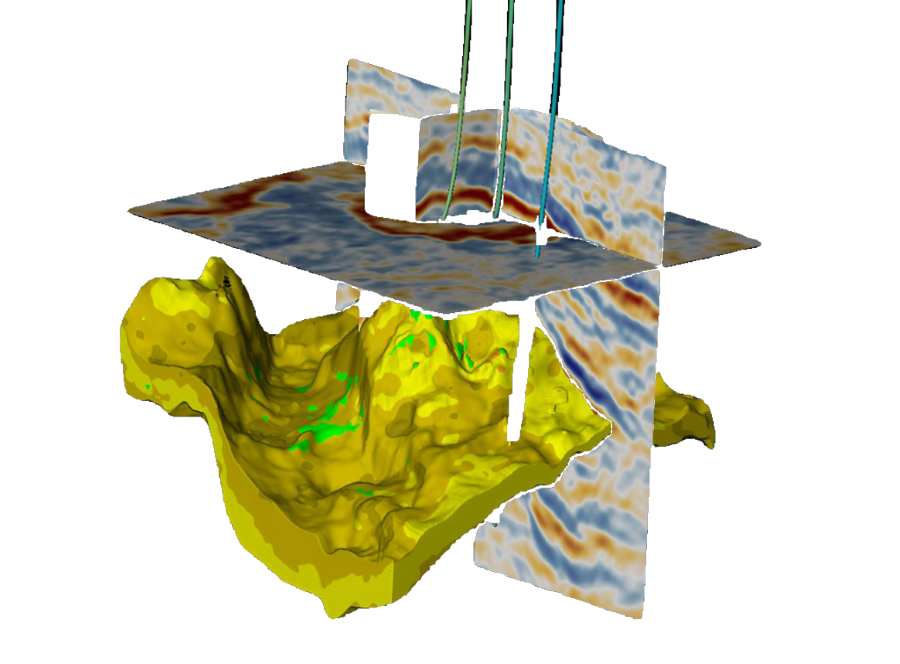
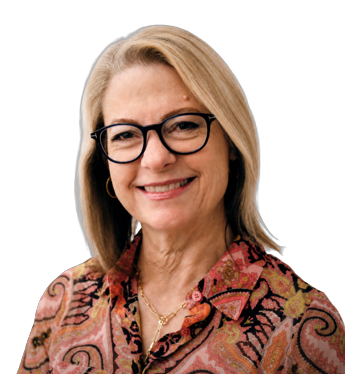
It’s quite amazing to see the advancement of seismic data analysis in the oil and gas sector from 2D structural paper-based mapping into its current integrated, quantitative, computer-based discipline. Not only did it advance into 3D data, it has transformed into 4D with the inclusion of a time-lapse dimension. Not surprisingly, the discipline is also now implementing AI-assisted interpretation. Laurie Weston is CEO, President and founder of Sound QI, an advanced geoscience analytics company and developer of the geological data integration software called Maestro based in Calgary, Alberta. Laurie has been an active geophysicist in the oil & gas long enough to not only observe those changes but to be a major contributor to those advancements. Business Edge senior editor Ernest Granson caught up with Laurie in Perth, Australia during a business trip and asked her about the founding of her company and her experiences in the oil and gas sector.
BE Laurie, Sound QI has come a long way from its beginnings as a provider of seismic reservoir analysis in the Canadian oil sands. Can you describe the origins of not only Sound QI, but also its predecessor, company, oil sands imaging?
LW I’d have to start with the context of where I was in my life at that point, which was just starting a family. I had little kids at home, babies even while balancing a professional caree.r I was a geophysicist working with seismic interpretation for multiple large companies, starting with Shell and then going overseas to England, working in Europe, Africa and Middle East interpreting seismic data for subsurface objectives, mainly oil and gas.
After I started my family, I stepped back a bit to do something less intense although I was still passionate about what I was doing and really enjoyed it. I began part time work with Wascana Energy’s (called SaskOil at the time) head office in Regina. They had a small International Office, and so I joined that office in London, England, and then went moved back to their office in Canada. While at Wascana Energy, I decided to shorten my work week from four days a week to three days, and then two days a week, after my third baby. Going from a fairly high profile career position to working two days a week I was assigned to a shared office, wasn’t invited to meetings anymore and got shunted to a different track. This upsets me female colleague or friends when I tell them about this treatment, but those were the times. I do understand this as a business owner now. You have an employee whose prime focus is not the business. But I was happy to the company was able to accommodate that.
Because I wasn’t going to meetings anymore, I was pretty much doing my own thing. It allowed me to develop a process of analyzing seismic data that would reveal information that was really critical to the way oil sands, in particular, were developed. I won’t go into the technical details, but I felt it had the potential to change the game. I continued to work very hard on my own on that project but didn’t have very good equipment, so the computers would regularly crash. On one of those days, when the computer crashed, I decided to buy my own computer and to lease the software. As I sat there, while my computer was doing its disc checking, I doodled a logo, came up with a name for a company, and by the time the computer was back up and running, I had a business plan. That business plan was really to just go buy computers and lease the software.
As I sat there, while my computer was doing its disc checking, I doodled a logo, came up with a name for a company, and by the time the computer was back up and running, I had a business plan. That business plan was really to just go buy computers and lease the software. Laurie Weston
Without an office or paying projects, I started going out for coffee with colleagues and saying, “Hey, I’ve started my own company. Would you have a project for me?” Before I had even bought the computers, I had four committed projects. In the meantime, a friend offered me spare office space. So, I started up the company and called it Oil Sands Imaging.
How did oil science imaging become sound QI? Well, in geology, oil sands is a very particular play – a certain petroleum system and a certain development type and style invented in in northern Alberta. But what about all the other oil companies that are in the Gulf of Mexico or the Permian Basin in the U.S. or Europe or North Sea? What are they doing, and could they use what we what we had to offer? The process that I used was not limited to application for the oil sands. It was something that could be applied anywhere, so we changed the name to Sound QI – sound being related to the sound wave seismic data that we were analyzing. But could also mean a thorough method of doing things. It was a double meaning that was perfect for this situation.
QI stands for quantitative interpretation, which means we’re taking that sound wave data and looking at the actual values or the measurements of those patterns, putting them together in graphs, doing the analytics on them and coming up with a translation from those measurements to geological properties like rock type, like the fluid types, whether it’s gas, oil or brine water, which is typically what most of geology is. Since this was a quantitative way of analyzing data, we changed the name to sound QI.
Within a month of changing the name, we were taken over by another company in Calgary. So, for the next five years, I was the Director of Geophysics at Canadian Discovery in Calgary, which offered a broader consultancy including hydrogeology, geomechanics, engineering. We were the geophysics team. Prior to the takeover we had begun developing specific software which we began commercializing at Canadian Discovery. At the time, the software was called iMac, which stood for interactive multi-attribute classification. Canadian Discovery wasn’t too keen on the name feeling we would get a Cease and Desist letter from Apple. That letter never came, but we’ve since changed the name of the software to Maestro.
Then, just as we were developing that software and getting some interest from oil companies locally, the downturn hit the oil and energy industry, about 2016. Many companies were losing money, cutting staff, and I felt certain that our team would also be cut because we had also run out of work. That’s when I talked to boss, and I said, “I’d like to get my company back.” We negotiated the transaction and I restarted in the middle of a downturn in 2017. The company consisted of myself and my co founder, Carl Riney, who is still with the company today. We began with one consulting project and one software sale. That was all we sold for a year and a half. We took no salaries. Eventually we scraped enough money together to hire a developer. Within two years, we were all getting paid, and hired a couple other staff members, gradually working our way back up to our former level and now beyond.
That was almost 10 years ago. While, we’ve many customers since then, we realized that the name of our software – Sound QI Pro – was limiting us. It had a connotation of technical processes, whereas our software is more visual logic, more of a creative way of combining different data types to come up with a unique interpretation that honors all the data and gives you real insights. It took months to decide on what kind of name would actually relate to that and would convey this broader integration of different data types.
Finally, a friend of mine, not involved in the industry in any way, blurted out, “How about Maestro?” Because that’s an orchestra. You can’t make music with just the drums. You can’t make music with just the symbols. That was what people were trying to do with different data types in oil and gas. They were trying to make decisions based on one data type or another data type, but very rarely did you see them all integrated. That’s how the name Maestro came about, and that’s what we are selling today, That’s why I’m here in Perth.
BE Speaking of the name Maestro, and that type of software, I wonder if you can explain the mental process that that you and your colleagues had to follow in order to actually write the programming to create this software which encompasses all of the functions that you had envisioned.
LW Back in the Oil Sands Imaging days, before we were taken over, I was doing most of the consulting work myself, the one pushing the buttons on the commercial software we used for the very sophisticated geophysical processes and delivering the products to my client companies. And we intentionally built multiple versions of the products because there’s multiple ways of looking at data. However, many of those clients would simply put them into their viewing software and choose only one or two of the products out of all the products that we offered. They would then use those for a very conventional pattern recognition interpretation. I could see they were missing the point because all of these products provide different aspects of the same target. If you’re looking at only one aspect, you’re just getting a single perspective on that target. You really need to look at all aspects together.
I use the example of the five blind people trying to describe an elephant. One is holding the tail and saying, “It’s like a rope.” Another one is holding the trunk and saying, “It’s more like a snake.” Another one is rubbing the side and saying, “No, it’s like a wall. Another one’s got the leg and saying, “It’s a tree trunk.” None of them are getting the full or the accurate picture unless they are put together spatially. You need multiple observations and you have to know where each observation is coming from to give you the whole picture. Then you can say, “It’s an elephant.”
Because those various observations weren’t being viewed as a whole picture I knew what had to be done. I started writing a script that would combine the observations in the way I thought would make sense, but it wasn’t interactive. You couldn’t visualize it. You had to run the script and then display the result and see if it made sense. Not being a programmer myself, I brought in a programmer to not only to write the coding to automate the scripts so I could use them without rewriting them for every project but to also build an interactive display. He was pretty much the only person working on the software for the first five years but it grew from there and last year he retired after 15 years with the company.
We continue to improve the software and each time I feel the need for a next step, I can see a whole other vision opening up. I still have many other enhancements to add which would completely change the way people interpret data. We’re talking not just seismic data or subsurface oil and gas data. One of the companies here in Perth that’s using our software is a mining company. That’s still in the same domain. It’s still subsurface, different product, different characteristics, different challenges. But there are also other data types, Even if you’re describing an elephant, you could put that data into our software, and you could visualize the parts of that elephant that are coming together. Imagine if it’s MRIs, brain scan data, ultrasounds, CT scans. Integrating all of that data is exactly the same idea. It’s just measurements and remote sensing with some sort of spatial component that you can put in context. There’s a lot of potential for this method that we’ve developed in so many different sectors.
BE There’s an interesting comment that you made in describing the software, and that is, as your company evolved, it became obvious that the workflow was actually applicable to any geological play, anywhere on or off the planet. What is that about?
LW There’s space exploration. There’s data being gathered on Mars, and there’s data being gathered from asteroids. I’ve talked briefly to a professor at the University of British Columbia who is involved in the Osiris project, which is a joint NASA project with several different institutions. They have sent a probe to an asteroid and gathered data. They’ve actually acquired some seismic data on this asteroid, very rudimentary sound waves, that have been sent into the rock and collected back again. Now, I haven’t seen any of that data and I haven’t pursued that angle yet, but it’s certainly something that I would like to pursue if I could get the time. I joke that our first company name was Oil Sands Imaging but OSI could also stand for Outer Space Imaging.
BE It must be pretty gratifying to help all of these major international energy companies find liquid and gaseous gold. Do you still enjoy the thrill of the hunt?
LW I certainly do. The thrill of that is exhilarating. Running a business, however, can really be a struggle at times. I have to do both. I’ve got the thrill of that excitement that comes from innovation and vision. But I’ve also have the day to day responsibility of making sure that the money is coming in and not going out faster than it’s coming in, that I can find the right people to do the right jobs, that I can inspire customers, and teach them how to use the software effectively so they are ambassadors for not only the software, but the company. I have to apply for grant money now and then from the government if it’s available. That’s always a lot of work. There’s accounting, there’s marketing, there’s sales, there’s HR. The list goes on.
I find it difficult some weeks, some months, to get back to the real challenge of ideas and innovation that I love and also just using our software on new projects like the mining project we’re working on now. I’m excited to dive in and see that data because there are nuggets of gold. But this is data gold. There is information in the data that nobody has ever seen before, and we can reveal things that we have never see before. We have data that we acquired 10 years ago and how other software applications looking at it and revealing exciting things. That’s the thrill for me.
BE You’re also a distinguished lecturer, Laurie. You’ve presented on a wide range of topics, including the future of oil and gas. What do you see in the crystal ball for Sound QI? You’ve discussed a little bit of that already, but what do you see in the future for not only your company, but the industry and the wider energy world?
LW Well, it’s been a roller coaster for the oil industry in all kinds of context, whether it’s environmental or social or geopolitical. I don’t pretend to be an expert on any of those subjects, but what I’ve had to do in my career, and what we’ve done as a company to adapt and survive, is to read the room and make changes quickly. Sometimes we’ve had to pull back. The whole COVID disruption affected everything, not just oil and gas. For a small company like ours, that was a huge challenge, and as soon as we started losing contracts I realized we had to react quickly. We all took pay cuts immediately, made some changes to cut costs, and tried to keep everybody on staff, but after about a year. we unfortunately, had to cut a few people. That’s the only time we’ve ever had to cut people for a financial reason. Many companies did not survive, so I’m pretty proud of the fact that we managed to navigate that.
BE A few years ago, you took on another challenge. You became the co-founder of a news company called BIG Media. How did that came about?
LW Well, that’s a Rob Driscoll inspiration. Rob Driscoll has been a journalist for many years and we met during the COVID pandemic so we had a lot of time to chat. He and I were both appalled at the information that was being conveyed in the news media about COVID and we both had a desire to figure out the truth. Rob had been doing some digging on different data that was available through government websites. He had published information on LinkedIn incorporating data obtained from the Alberta government. LinkedIn deleted the post claiming it didn’t fit the narrative. That is when he decided to start his own news media business. My comments were, “You have to get the right data and show it impartially. Don’t apply any biases. Let the data speak for itself and don’t be too opinionated.” So we worked together finding somebody to help us build the website. When it came to creating a name we went through lots of ideas, and decided on BIG Media. BIG originally stood for Business Intelligence Group, Rob’s existing company, which we shortened to BIG. But it has multiple meanings as well and it’s kind of a tongue in cheek answer to the mainstream
media.
We launched in February 2021while I was struggling to try to navigate the COVID effect on my day job. I became the Scientific Strategist fir BIG Media since my expertise is working with data from a statistics point of view. Although it was my responsibility to review other professionals’ work and editing for publication, I ended up writing many of the articles myself because one of the first articles I reviewed included incomplete data on the causes of death in Alberta. The data in the article was only a subset of what was available so I went back to the source and downloaded all of the causes of death in the province over the past 20 years. At that point, COVID was not even considered a cause of death in that database, but it had been assigned as a cause of death throughout 2020. Now, the data was almost 18 months out of date and didn’t have COVID in the database that year. I combined it with the COVID deaths that were being reported from the Alberta Health database and from that data, I built charts that showed the trends of death rates. Those make sense if they are broken down into different categories such as gender groups and age groups because obviously things that kill men in their 90s are different than things that kill women in their 40s.
I learned a lot about how many people die in Alberta and how they die. That steered me towards a path to continue digging for more data. But it wasn’t just COVID and causes of death data that I studied. It was also energy, naturally, being involved in that area. That is how the whole future of oil and gas speaking engagements originated. I had published an article showing the mix of energy types that different countries use, and how that is changing over the years. It was really interesting to see different groups of countries and what powers those countries. Is it coal? Is oil? Is it nuclear? Is it natural gas? Is it hydro? And how are renewables – wind and solar and geothermal – fitting into that mix? Are they keeping up with demand? Are they growing proportionately in that energy mix? All these questions are never properly and thoroughly answered in the media. The media will give you the emotional or maybe even the propaganda sound bites, but they won’t give you the real data and the real trends and put that into real context. I’ve tried to answer those questions in my work with BIG Media. I believe I’ve written more than 30 articles in the past couple of years in that area. It’s a passion of mine.
BE On a personal front, Laurie, I understand, not only are you mother but you’re also a grandmother. How have you found that experience in trying to fit in everything?
LW Well, that’s just another aspect of a full life, right? Yes, my oldest daughter has four little boys now. They range in age from seven to one and they all live on Vancouver Island. I love that I have an excuse to go to Vancouver Island because I went to university in Victoria and ended up with a career in Calgary and elsewhere. All my three daughters have eventually moved there., It’s a really nice interlude when I go there, although I usually don’t get a full day off because there’s always some fires that need to be, if not put out, at least contained. That used to frustrate me and my family, but now they are aware I’m going to need two hours a day on business. If I don’t do that it will occupy my mind while I’m sitting on the beach or on a on a boat or whereever. If I can do those two hours, then I can play with the grandkids, go to the park with them or help them ride their bikes or throw a ball for the dog.
BE That is the fate of a business owner, isn’t it?
LW Yes, balancing those areas is really important for my own peace of mind and for my family.
BE Laurie, we thank you so much for taking us through your journey and that of sound Qi, and we look forward to seeing what’s next for you and for your company.